Sources checked 4 November 2026 · Check current NPS notices before travel
Some links are affiliate links. We may earn a commission on qualifying bookings at no extra cost to you. This does not determine your price or guarantee availability.
Use the maintained approaches and check the final climb
The South and West approaches through Highway 62 are the maintained winter routes. North Entrance Road and Rim Drive close to ordinary wheeled vehicles. Munson Valley Road connects Highway 62 with headquarters and Rim Village, but the final three-mile climb from headquarters can close temporarily because of storms, ice, incidents or operational needs.
A clear forecast does not guarantee that crews have opened a road after the previous storm. Read current NPS conditions and Oregon TripCheck for the approach highways, then make the vehicle plan match the actual requirements. The park is a snow zone; confirm traction requirements and the rental company’s equipment rules rather than assuming a rental vehicle is automatically prepared.
Check visibility separately from access
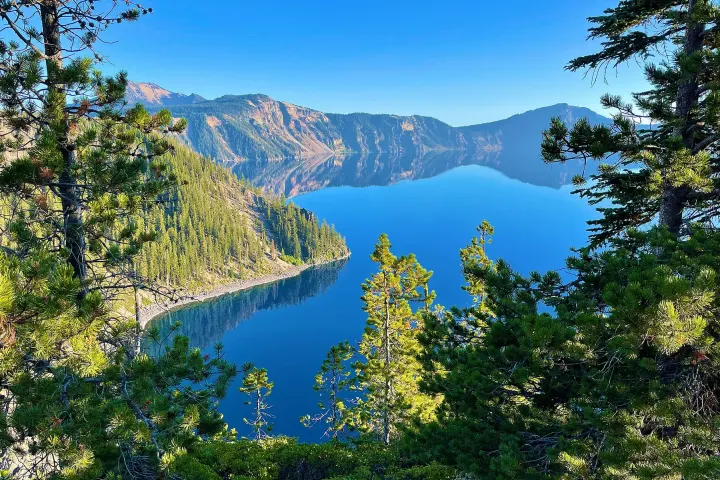
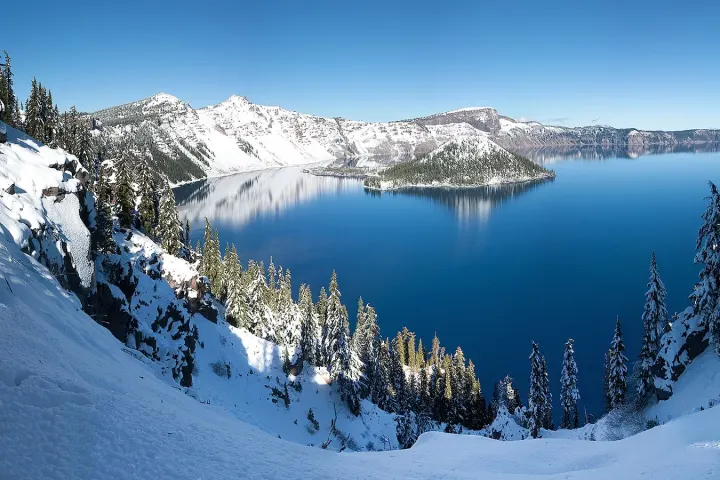
The lake may be obscured by cloud or snowfall even when the road is open. NPS’s winter guidance warns that picture-perfect lake views are not the typical daily experience throughout the season. A trip whose only acceptable outcome is a blue-water photograph needs flexibility, and perhaps a different season, rather than a promise from a hotel or tour description.
Inspect the webcam timestamp, the weather forecast and the road notice as three different pieces of information. An old clear webcam frame is not a current observation; a forecast is not a guarantee; an open road is not a visibility report. Decide in advance whether a snowy forest visit would still be worthwhile if the caldera remains hidden.
Choose between a brief view and actual snow travel
A short visit near an open, suitable viewing area is different from walking away from cleared surfaces. Snowshoes or skis can be useful for travel on deep snow, but equipment alone does not resolve route-finding, exposure or changing weather. Summer trails may be unmarked under snow and should not be followed from memory or a photograph.
For an independent outing, select a route within the group’s experience and current park guidance, and carry the clothing, food, water, navigation and emergency supplies that the actual journey needs. Rim Village is an orientation point, not a promise that every adjacent summer path is suitable for winter walking. Keep a conservative turnaround and a realistic drive home.
Ranger snowshoe walks are a separate programme
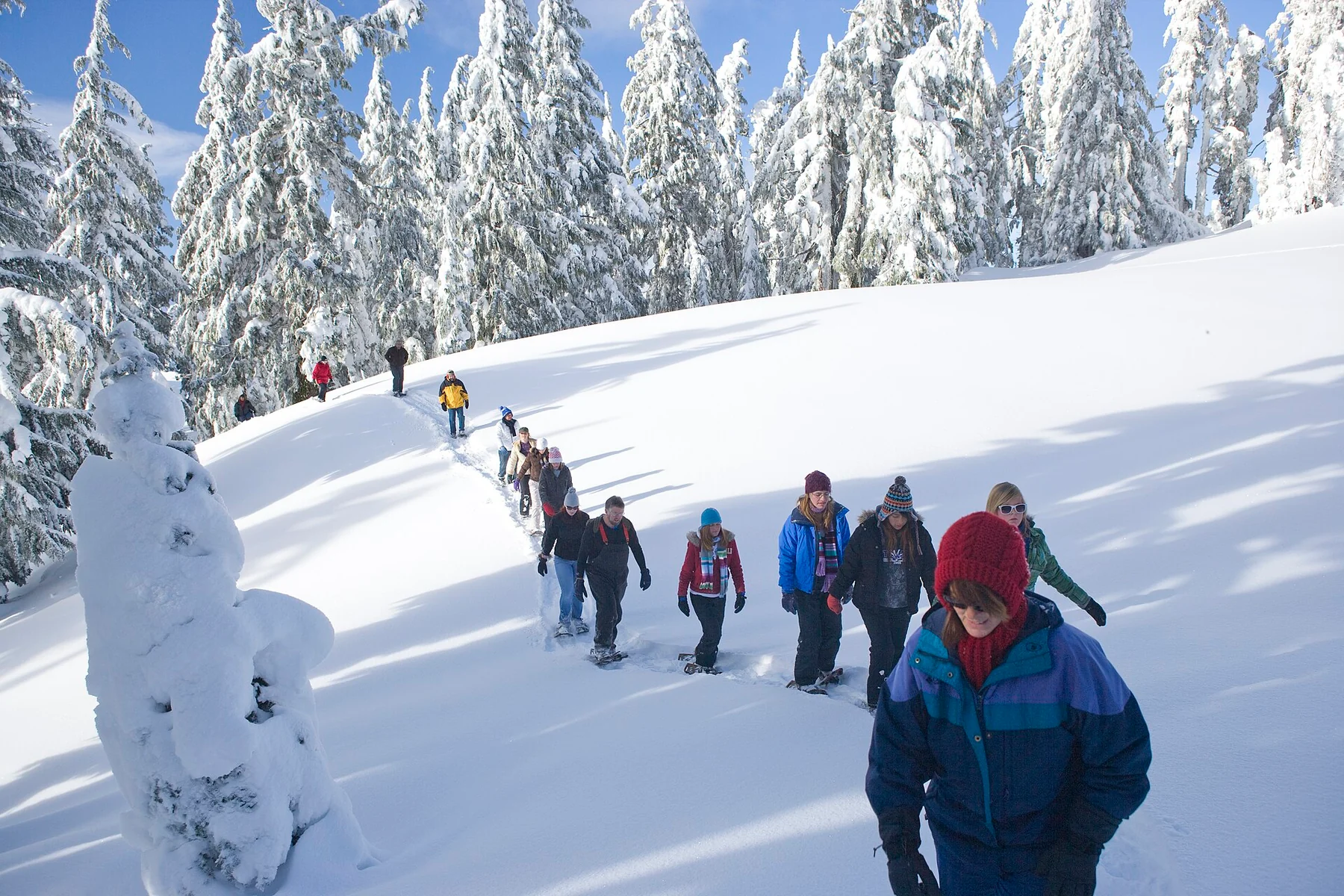
The NPS ranger-walk page describes roughly two-hour outings of one to two miles over moderate-to-strenuous off-trail terrain, with snowshoes provided and a minimum age of eight. Advance reservations are required and pets are not allowed. Routes are chosen by the ranger and may be near headquarters if the upper road is closed.
That programme page was last updated in December 2025, so its recurring weekend and holiday description is not a confirmed 2026–2027 departure calendar. Contact the park through the page for the actual dates, meeting arrangements and available places. Do not arrive assuming a walk will depart, and do not confuse the free programme itself with the separate park entrance requirement.
The caldera edge is not an ordinary snow slope
Snow can form cornices that project beyond solid ground, conceal the edge and create other hazards such as tree wells. Stay well away from uncertain edges and obey current park guidance. The lake is far below the rim, and descending the caldera is not an authorized route to the water. The Cleetwood project does not create any alternative winter access.
NPS says downhill skiing and snowboarding in the caldera are prohibited, the park has no chairlifts, and there is no formal avalanche forecasting service for the park. A general travel guide cannot assess a particular slope. Visitors considering backcountry terrain need appropriate training and equipment, not reassurance based on a photograph of someone else’s tracks.
Snow play and pets have specific limits
The park does not provide designated sled hills or a managed snow-play area. NPS directs visitors to choose gentle, obstacle-free terrain with a safe stopping area and prohibits sledding in the caldera, on roads where vehicles may travel and in parking lots. A convenient roadside bank is therefore not automatically an appropriate place to play.
Pet access also changes with snow. Permitted areas include specified plowed parking and snow-free paved-road situations, while most ski and snowshoe routes do not allow pets. The official Pacific Crest Trail has different rules from the rim alternate. Read the detailed pet guide before assuming a dog can follow every winter route open to people.
Choose accommodation and supplies for a winter road day
Select a southern or western base according to the route you can use. A northern room that is close in summer may require a substantial detour in winter. The current seasonal notice lists the park lodge, cabins, campground and pumps as closed; carry food and fill fuel outside the park instead of building the day around summer facilities.
A city-area night can provide more services, while a smaller gateway stay can reduce part of the drive. Compare the exact location and arrival arrangements in the accommodation guide. Keep a non-park alternative available when conditions are poor, and treat a successful winter visit as a well-judged outing rather than a test of whether the original plan can be forced to work.
Snowshoe walk details and the snow behind them
The NPS ranger-walk page, last updated on 26 December 2025, describes walks on Saturdays, Sundays and holidays from late November through April, conditions permitting, with extra weekday walks during the winter and spring school breaks. Walks start at 12:30 pm, last about two hours, and snowshoes are lent free of charge. The walk itself is free, but the winter entrance fee of 20 dollars per vehicle still applies.
Reservations are made by telephone with the park on 541-594-3100; recheck the page for the 2026–2027 season before you travel. The snow that makes these walks possible is substantial: NPS gives an average of about 41 feet, or 12.5 metres, of snowfall a year at headquarters, so even a short walk away from the car can mean deep, soft snow.
Questions before you go
Can I drive around the lake in winter?
No. Rim Drive and North Entrance close to ordinary wheeled vehicles. Use the maintained South or West approach and check whether the upper road to Rim Village is open.
Are ranger snowshoe walks guaranteed every weekend?
No. The programme depends on snow, weather, staffing and reservations. The general page is not a confirmed departure calendar for your date; contact NPS for current arrangements.
Do I need to snowshoe to see the lake?
Not necessarily if suitable viewing access is open and conditions permit. But an open park entrance does not guarantee the upper road, cleared surfaces or visibility.
Does the park publish an avalanche forecast?
NPS states that there is no formal avalanche forecasting service for the park. Backcountry snow travel needs appropriate skills and judgement; this guide does not assess slopes.
Sources & editorial notes
Sources include National Park Service notices, official regional information and verified accommodation and activity listings. A dated check is not a live operating-status guarantee.
- National Park Service: Winter Activities ↗
- National Park Service: Ranger-Guided Snowshoe Walks ↗
- National Park Service: Current Conditions ↗
- National Park Service: Pets ↗
- National Park Service: Safety ↗
- National Park Service: Cleetwood Cove Trail and Marina Rehabilitation ↗
- National Park Service: Weather ↗